
I Couldn’t Read My Index Cards! Then They Introduced Me.
I Couldn’t Read My Index Cards! Then They Introduced Me. A few weeks ago, I gave a keynote speech in Florence for a new company. It was in Italian. Now, I speak Italian fluently. I work in Italian. I lead trainings in Italian. I’ve lived in Italy for 20 years. Italian is not my mother tongue. Even when you are incredibly fluent, doing a speech or an important presentation in front of a large group in a language that is not your mother tongue is always intimidating. At the very least, it makes you self-conscious of any error you might make and be judged upon. So although I felt about 95% memorized, I had a safety net: professional index cards with the outline of the speech printed on them. Just in case. On the morning of the keynote, I did everything I tell other speakers to do. I warmed up my voice. I did my breathing exercises to calm my nervous system. When waiting, in the audience, for my turn to speak, I sat in a power pose— an open, grounded posture—to tell my brain, YOU CAN DO THIS! Then they introduced me. I walked onto the stage. And discovered one tiny problem. I couldn’t read my notes!!! The lights in the room were much dimmer than I had expected. And at 47, while my eyesight is perfectly good at a distance, close-up reading has become another story. I needed my reading glasses. My reading glasses were not with me. Because, naturally, I had never once thought: What if I need reading glasses onstage? DAMN AGING! So there I was. Onstage. In front of a room full of people. Giving a keynote in my second language. With index cards I could barely read. And this is where my PREPARATION kicked in. Preparation creates confidence. One of the ideas at the heart of my keynote was that confidence is something you can learn to communicate through your mind, body, and voice, no matter your mood, life pressures, or emotional state. But there’s another piece I would add: Confidence is also built through preparation. Actors understand this instinctively. We don’t rehearse a scene once and then hope inspiration strikes on opening night. We say the words out loud. We get on our feet. We repeat the words over and over. We discover where to breathe, where to move, where to pause, where the thought changes. Eventually, the words stop living on paper or at the tip of your tongue. Your body begins to know them too. That is exactly how I had rehearsed this keynote. Not silently at my desk. But out loud. Wherever I was, which in this case, was a SAILBOAT! Again and again and again. So when, on that stage, I realized my safety net was suddenly not very safe,I had a choice: Panic. Or trust the work I had already done. I trusted the work. THE TRICKS OF THE TRADE Memorize the beginning You MUST know the first few minutes of your speech exceptionally well. Why? Because at the beginning of a speech, your job isn’t remembering every brilliant sentence you wrote. It’s connecting with the audience. Look at them. Let them look at you. Breathe. Smile. Be present. Make them feel that you are talking to them, not reciting something at them. Connection buys you an enormous amount of goodwill and empathy. If the audience feels connected to you and you later stumble over a word, forget a sentence or need a second to find your place, they are happy to forgive and forget OR they don’t even notice at all. They want you to succeed! And because I knew those opening minutes cold, I could walk onto that stage without immediately worrying about my cards. 15 Minutes into my speech, I forgot a transition. My mind suddenly went: What comes next? Nothing. I could not remember. This is another thing acting teaches you: Don’t advertise the mistake. The audience doesn’t have your script! They don’t know what you were supposed to say next! So I stopped. I looked down. I let my eyes focus. I found the next few words on the card. And I remembered! That was it. No panic. No apology. No “Sorry, I lost my place.” Just: find the thought and keep going. Over the entire keynote, I looked at those cards only three times. Everything else was there. Because I had prepared. TEDx spotlight Have you watched my TEDx talk yet? If you are thinking about your presence, your voice or how you communicate under pressure, my TEDx talk offers a useful starting point. It is a reflection on the stories we tell ourselves, the messages we communicate to others, and what becomes possible when we allow ourselves to be more fully seen and heard. SUMMER MUSINGS WHILE I HAVE HAD MORE TIME TO THINK ABOUT ME (and not only my fabulous clients, kids and hubbie) The summer is over. The kids are back in school. I’m getting back into the swing of things. But I’m not there yet. My mind is still in vacation mode, which really means reflection mode. One theme that I became slightly obsessed with this summer was the idea of longevity. You might make an immediate connection between my need for reading glasses during the (above) keynote speech and longevity, and you are not wrong. And yet, I am not at all interested in longevity from the wellness-trend point of view. I couldn’t care less about longevity IV’s, expensive peptides, and tons of plastic surgery to make me look younger. I’m talking about how to age with a functional mind, an agile body, a dose of humility and a few doses of “umph” to keep me living with positive energy into what Italians call “la terza età” (the third age). “La terza età” refers to older adulthood– from active retirement to more advanced old age. What I see around me, from both my American parents and
Working with your team
From CEO to Junior Staff: The Public Speaking Challenges Are the Same Last week in Vienna, I had the opportunity to work with the cross-functional leadership team at AOP Health, focusing on persuasive speaking. When leaders from R&D, Clinical Development, Regulatory, Legal, HR, and Communications come together, one thing becomes very clear: influence is not tied to a title—it is tied to how well you communicate your ideas. In highly technical and scientific environments, clarity is of utmost importance, especially when you have as broad an audience as the cross-functional heads of a pharmaceutical company. Two things set strong communicators apart from weak ones: The ability to communicate why what you are saying is of value to your audience AND The ability to engage the audience and keep their attention throughout the presentation. I view it as a mix of performing while communicating your key messages succinctly. In Vienna, the biggest challenge for these high-level leaders was communicating right from the start why the audience should actually listen to them. What was their real message? Why was it of value to their specific audience? Many of them over-explained their content. But when we were in the audience, we told them that we didn’t need all of the details, that too much information actually confused us; these leaders became much more focused and interesting speakers. Even an actor goes through this process when approaching a new role- you first have to figure out why you are saying what you are saying. Then you learn your lines and put the physicality and voice on top of it. But you start with: WHY AM I SAYING THESE WORDS? WHAT IS MY MOTIVATION? So, before you start building your slide deck, ask yourself: in 1-2 sentences max, Once you’ve honestly answered that question for yourself, build your slide deck with that information – the 1-2 sentences they need to know, a few slides with stories, case studies, or a chart that proves or explains your main message, and a call to action that tells the audience what you want them to do now. And that’s it! Pro tip: Your slides should feature engaging visuals and minimal text. You fill in the extra content, not your slides. If the audience doesn’t understand something or wants more details, don’t worry. They’ll ask! Remember- you communicate expertise more clearly through simple, succinct messages. Throw in a bit of flair (through storytelling, audience interaction, and attention getters!), and your audience will listen more willingly AND see your value. The training in Vienna was a valuable reminder that whether you’re a CEO or a Junior staff member, you’ve got to start with: “This is why what I will tell you today is of value to YOU!” Online Now! Voice Is a Superpower (and It Changes Fast) You might remember in February, when I mentioned my podcast with Nur? Well it is live! You can watch it on their Youtube channel, but in the meantime here is a clip… Did you miss my last Speak Easy Secret? Every presentation needs an engaging delivery and that requires vocal variety, energy, and presence. These exercises help warm up the voice, calm the nerves, and connect the mind, body, and voice so they work together more effectively. This ritual helps me: * Improve articulation * Calm nerves * Strengthen vocal and physical presence * Increase energy and focus * Walk into the room feeling ready With gratitude, Elia Communicate the best of yourself. PS – If this info was helpful, please pass it on to someone else who could find it beneficial!
What I Do 10 Minutes Before Every Speech, Lecture & Performance
Before every keynote, presentation, TEDx talk,… lecture, training session, or performance, I do the same thing: a preparation ritual. Why? Because engaging delivery requires vocal variety, energy, and presence. These exercises help warm up the voice, calm the nerves, and connect the mind, body, and voice so they work together more effectively. This ritual helps me: * Improve articulation * Calm nerves * Strengthen vocal and physical presence * Increase energy and focus * Walk into the room feeling ready You don’t need to be a professional speaker to benefit from these techniques. They can help before presentations, meetings, interviews, teaching, video calls, or any situation where you want to communicate with greater confidence and presence. If you’d like to become a more confident, calm, and engaging speaker, I’d love to help. Reach out to learn how coaching can help you communicate with greater presence, impact, and ease. Online communication Tips! The 7 Technical Do’s & Don’ts of Communicating & Presenting in Live Video We’ve all experienced it: a brilliant professional enters a live video meeting looking like they’re broadcasting from the bottom of a cave. Virtual communication is now essential for business, yet many people still struggle to create the same trust, presence, and connection online that comes naturally in person. One of my favourite sections in this article is point number 5: “Light your eyes!” because great lighting instantly makes you appear more engaging, confident, and human on screen. No expensive studio required, sometimes even an old Ikea lamp can work miracles. Take a look at the full article for 7 practical technical tips that can dramatically improve your online meetings and presentations. No! We want More! I was recently in Milan, where I led a 2.5-hour Advanced Public Speaking Delivery Workshop for infectious disease doctors — and the energy in the room was unbelievable. Many had never been trained in public speaking before, yet they threw themselves into new voice techniques, audience engagement strategies, and the magic of metaphors with total courage. The transformation was immediate. You could literally hear and see the difference in their delivery within minutes. At the end of the workshop, after a full conference day, I said: “All good things must come to an end.” The room answered: “NOOOO! We want more!” That moment meant everything. Watching hesitant speakers become engaging, dynamic, and powerful in just a few hours was electric — an infectious mix of their energy and mine. With gratitude, Elia Communicate the best of yourself. PS – If this info was helpful, please pass it on to someone else who could find it beneficial!
It’s interview season.
Parents, it’s Interview Season University and boarding school applications.Summer internships.First job offers.Even promotion interviews for mid-career professionals. And they all come with the same challenge: How do you talk about yourself—clearly, confidently—without sounding either too humble… or arrogant? Easier said than done. Because most people have never been taught how to speak about themselves under pressure. In just the past few weeks, I’ve worked with: After the interview prep, one of these students wrote me: “When I am under pressure, I tend to block while speaking. Working together really helped me overcome this. You taught me new techniques that allowed me to express myself more clearly and improved how I presented myself onscreen.” So how can you ace that interview that counts so much? Interview Tips! Two Questions That Trip You Up (and what to do instead) Last week, I taught an interview workshop at New York University in Florence. And I kept hearing the same sentence: “I knew what I wanted to say… but it didn’t come out right.” Interview preparation can change everything! Let’s tackle how to best approach 2 of the most common and tricky questions. 1 – “Tell me about yourself.” Most candidates either: Neither works. Because this is actually the only question in a job interview where the interviewer can really get to know the real you. DO NOT RECITE YOUR CV (or “resume” in the USA)! In 1 minute or less, you might say… …but the impression you make still matters just as much. You might be surprised to hear that even acting auditions often happen over Zoom! Yes, really. And here’s the truth: even the most perfectly crafted answer can fall flat if you’re not thinking about who’s on the other side of the screen. Don’t forget that virtual communication is still communication. Your presence and personality shouldn’t disappear just because you’re behind a screen. I’ve put together three Best Practices for Online Calls that will help you work your next Zoom interview. These details make the difference between being heard… and being overlooked. With gratitude, Elia Communicate the best of yourself. PS – If this info was helpful, please pass it on to someone else who could find it beneficial!
Spring Cleaning for Your Speaking (and a professional milestone!)
A year ago, my TEDx talk was published… and I remember exactly how unsure, even hesitant, I felt. There’s something uniquely exposing about putting your voice—and your image—out into the world. It’s rather terrifying, honestly. You get no chance to clarify or to adjust.There is no second take! You are just… out there. And in many ways, that’s what speaking has become for all of us. A post.A video.An interview.A presentation that gets recorded and shared. We’re constantly being seen—and interpreted by others.Often, without the chance to clarify or reshape that impression. As speakers, we’re used to adapting in real time (or we should be!). We read the room.We shift our energy based on what we see.We listen. We adjust.We meet people where they are. But recorded speaking asks something else entirely. You don’t get feedback in the moment.You don’t get to adjust as you go. You just have to trust that what you said… lands. And that requires letting go. You have to trust your message enough to let it stand on its own. Do I feel my TEDx performance is perfect? NO! There are so many things I’d change if I could. But I can’t. I DO trust my message in it though, 100%. What has come from my TEDx talk is not fame. But something much more useful. Visibility—yes.New clients—absolutely. But more than that, it’s become a kind of living introduction. People arrive already having a sense of me. My style. My way of thinking. A glimpse of how I work. And when it resonates, they reach out. New! Spring Cleaning for Your Speaking Spring makes us think about blooming—rebirth, new energy, growth. But in speaking, real growth often comes from removing something. Cutting content on slides.Cutting unnecessary movement—swaying, head bobs, those little habits we don’t notice.Cutting fillers (the ums, the uhs… all of it). I challenge you… What can you let go of? Maybe it’s: And one more challenge: Take a moment to look back at how you were speaking a year ago. Not to judge it. Just to notice it. Because chances are…you’re not the same speaker you were then. The goal isn’t to sound perfect. It’s to feel at home in your voice—so when you speak, people hear you, not the effort behind it. Did you miss my last Speak Easy Secret? Eliminating little filler words and sounds. Last month’s Speak Easy Tip explored a small habit that quietly shapes how we are heard: those little filler words like “um,” “uh,” or “you know.” They often slip in unnoticed, yet they can pull attention away from the message we want to share. If you missed it—or haven’t tried the exercise yet—it’s a simple but powerful shift that can instantly change the way your voice lands. You might be surprised by how much clearer and more confident your speaking becomes with just a small adjustment. Watch the video below to revisit the technique and try it for yourself. With gratitude, Elia Communicate the best of yourself. PS – If this info was helpful, please pass it on to someone else who could find it beneficial!
The Habit That’s Undermining Your Authority
When “Um” Takes the Stage Have you ever caught yourself mid-sentence and realized that you’re saying “um,” “uh,” or “you know” far too often? It’s something we don’t always notice, but others do. Recently, I invited a speaker to present at an international association I’m part of. Her content was truly valuable—but the fillers? They were so constant I actually stopped listening. I regretted that, because I knew she had so much to offer. That moment reminded me: even brilliant ideas can get lost if fillers overshadow them. The good news? It is possible to remove fillers!! In the video below, I’ll show you exactly how to eliminate fillers—and replace them with something far more powerful. If you’re ready to replace hesitation with authority in your next presentation, I’d love to support you. Stay tuned! Something exciting is in the works… Recently, I was invited by Makaeel Sheikh, Founder & CEO of Nūr, to join a conversation about something that fascinates me: The gap between how we think we communicate… and how we’re actually heard. At Nūr, they’re exploring communication awareness through technology, looking at the subtle signals that shape every interaction: tone, pacing, presence, confidence, the invisible layer behind our words. I had the pleasure of meeting the team and recording a podcast together, and I left the conversation energized, and genuinely excited about the possibilities this kind of work opens up. Podcast episode coming soon… stay tuned. Did you miss my last Speak Easy Secret? Clear. Respectful. Direct—without being harsh. Assertiveness has a reputation problem. For many professionals, the word suggests conflict, confrontation, or being “too much.” So instead, we soften our language. We over-explain. We stay quiet when something needs to be said. The irony? Avoiding assertiveness often creates more tension than using it well. In my work with leaders and teams, I regularly see how a small shift in clarity can reduce stress, prevent resentment, and strengthen relationships, both professionally and personally. Assertiveness is not aggressive.It is not unkind.And it does not require a personality transplant. But it does require intention. I’ve shared a few practical insights on what assertiveness really is and how to apply it in everyday conversations. If the word still feels uncomfortable, this may be worth a read. With gratitude, Elia Communicate the best of yourself. PS – If this info was helpful, please pass it on to someone else who could find it beneficial!
Assertiveness: A Skill to Add to Your Toolkit This Year
A Skill to Add to Your Toolkit This Year I recently wrapped up a training on assertive communication, and—as often happens when I teach this topic—I walked away thinking: This shouldn’t be reserved for boardrooms or training rooms. January has a particular kind of energy. Fresh calendars. New intentions. A quiet hope that this year might feel a little lighter. And yet, many of us carry the same patterns straight into the new year:overcommitting, staying silent to avoid friction, and saying yes when our body is already tired. So for this January edition of Speak Easy Secrets, I want to offer you one skill that has the power to change not just how you speak—but how you move through the year: Assertiveness. Not as a personality trait.Not as a leadership style.But as a daily communication practice of clarity and self-respect. What assertiveness really is Assertive communication means expressing what you think, feel, and need clearly and calmly—without aggression and without shrinking yourself. What assertiveness sounds like in everyday life Assertiveness doesn’t have to be heavy, rude, or dramatic. It often sounds refreshingly simple. It can sound like: No blaming.No long explanations.No apologizing for having needs. Just clear, grounded communication. Assertive ≠ Aggressive One of the biggest myths I see—especially with international professionals and thoughtful leaders—is this: If I’m assertive, I’ll sound rude. But assertiveness isn’t about pushing. It’s about respecting your boundaries—and asking others to do the same. It’s firm and kind.Calm and clear.Respectful—to others and to yourself. And yes, you can be assertive: Healthy communication systems depend on this balance. What assertive people do consistently When you look closely, assertive people tend to do three things—again and again: 1. They take responsibility for what they say (and how they say it).They don’t blame, accuse, or hide behind vagueness. 2. They communicate expectations clearly and explicitly.They don’t assume others will “just know.” They say what works—and what doesn’t. 3. They accept that they can’t control how others respond.This is the hardest—and most freeing—part. Assertiveness isn’t about guaranteeing a positive reaction. It’s about showing up clearly, respectfully, and honestly. A simple structure you can use right away If you ever freeze in the moment and think, “I know I should be assertive, but I don’t know what to say,” try this: I + concern or expectation + concrete request + deadline or next step For example: Clear.Respectful.Direct—without being harsh. A small January invitation As you step into this new year, here’s my invitation to you: Notice one situation where you usually default to silence, over-explaining, or saying yes out of habit. Experiment with a clear, respectful, assertive response instead. You might be surprised how much lighter things feel when your boundaries are clear—and how much more peaceful your life can be. Here’s to a calmer, clearer, more intentional start to 2026. Here’s what made it work: I started with the audience, not the slides. Before writing a single word, I asked myself what busy doctors truly needed to know about giving engaging congress presentations and, just as importantly, what they did not need. Every story, example, image, and data set came from the medical field. Even articulation exercises used terms like “streptococcus” and “antimicrobial resistance.” Not your typical tongue twisters. The outcome? A fully engaged room and practical tools participants could use immediately in their next congress presentation. If you want your keynote to land, start with your audience. Everything else follows. Did you miss my last Speak Easy Secret? A new client recently told me, “I hate introducing myself.” And I understood exactly what he meant. We introduce ourselves constantly — in meetings, at events, on Zoom — yet so many people stumble, apologize, or leave feeling like they made a weaker impression than they hoped. But here’s the funny thing: there’s no one you know better than yourself. Logically, introducing yourself should be the easiest thing in the world… right? Here is a tutorial with a few tips on how to improve your introduction … and your success! With gratitude, Elia Communicate the best of yourself. PS – If this info was helpful, please pass it on to someone else who could find it beneficial!
Notes From Vienna: What Coaching Abroad Reminds Me About Communication
Hello! You may have noticed this isn’t a November newsletter (it’s Dec. 1!) — and that’s intentional. I wanted to give you uninterrupted Thanksgiving time with your loved ones, and I also needed a moment to fully absorb my unforgettable coaching trip to Vienna. Now that I have, I’m thrilled to share it with you. Consider this your early-December spark of brightness! ✨ I’ve just returned from beautiful Vienna, where I was invited to train a team on How to Present to Senior Executives — a program I’m often brought in to teach around the world. Working in different countries always gives me a new perspective. Each team communicates differently, and adapting to those nuances is one of the most rewarding parts of my work. They’re Not All the Same: Speak to the Audience in Front of You Coaching in Austria gave me fresh insights into how communication shifts in different environments. A quick note before I share my observations: these reflections come from working with one specific team — eight Austrians, one Slovenian, and one Egyptian. What I noticed applies to them, not to a country or culture as a whole. Human communication is too rich and complex to generalize. Here are the two insights that stayed with me: 1. A Calm, Understated Communication Style Working mostly with Americans and Italians, I’m used to communication that tends to be energetic, animated, and outwardly expressive. In Vienna, this team had a different style — measured, subtle, and intentional. Their gestures were smaller, their physical presence quieter, and their vocal clarity excellent. What surprised me the most was their humor! Warm, surprising, and frequent — which made our work both joyful and engaging. As a coach, I adapted. Instead of encouraging big expressive movements (which would have felt forced and aren’t ideal for executive settings anyway – no matter the country or culture), I focused on the powerful tools that matched their natural style: stillness, strong eye contact, intentional gestures, vocal modulation, and an open, confident stance. Not to change them — but to help them amplify what already comes naturally to them. To make their authentic style stronger, clearer, and more confident. 2. They Responded Best to Gentle, Collaborative Feedback This group engaged most deeply when feedback was: When my feedback became too direct, I saw some participants close off. So I shifted, by bringing in more dialogue, more demonstration, and more collective learning. The result? More confidence, more engagement, and a room that felt safer, curious, and open. This reinforced a core truth of communication coaching: Effective guidance always starts with active listening, careful observation (using both the eyes and the ears), and empathy. Audience-Centered Speaking Why This Matters for Every Presenter Whether you’re presenting across countries, across departments, or across generations, one question always shapes your success: Who is my audience, how do they communicate, and what do they need from me? Not: What do I want to say? How do I want to say it? Audience analysis isn’t about making assumptions — it’s about observing, listening, and adapting in real time. A Final Thought From This Trip My experience with this team in Vienna reminded me of something I adore about communication: charisma is intangible. Sometimes charisma is big and vibrant. Sometimes it’s quiet, warm, bubbly, and thoughtful. What I love is that no matter where I work or who I work with—Austrians or Americans, introverts or extroverts—everyone can grow into more powerful speakers when they have the right tools, techniques, and the support of good coaching and feedback. If you’re preparing for a high-stakes presentation or want to feel more confident adapting your speaking style to different audiences, I’d love to support you. Just reply to this email and we’ll schedule your next session. Upcoming 2026 Retreat in Tuscany! Every now and then, an invitation comes along that feels like a wholehearted “yes.” This March, I’ll be one of the instructors for a 5-day Renaissance immersion retreat in Florence — an intimate exploration of art, craft, voice, food, beauty, and the kind of inner leadership that reshapes a life. Have you been needing a change? This is your chance—don’t miss an experience that could truly shift something in you. Did you miss last month’s Speak Easy Secret? A new client recently told me, “I hate introducing myself.” And I understood exactly what he meant. We introduce ourselves constantly — in meetings, at events, on Zoom — yet so many people stumble, apologize, or leave feeling like they made a weaker impression than they hoped. But here’s the funny thing: there’s no one you know better than yourself. Logically, introducing yourself should be the easiest thing in the world… right? Here is a tutorial with a few tips on how to improve your introduction … and your success! With gratitude (and warm memories of my time with this wonderful Viennese team), Elia Communicate the best of yourself. PS – If this info was helpful, please pass it on to someone else who could find it beneficial!
Want to prepare a TEDx Talk?

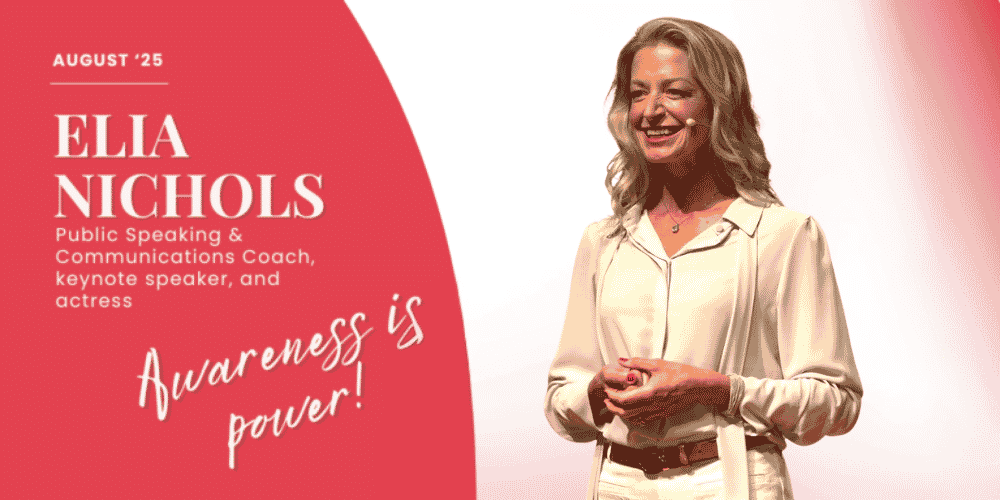
My TEDx Talk Preparation Video Guide It’s TEDx Talk coaching season — at least for me! I’m currently working with 2 incredible speakers on their upcoming talks, and it has reminded me just how important the prep process is. There’s absolutely a right way and a wrong way to prepare for a TEDx talk. Let me tell you a quick story about the wrong way. Just yesterday, a dear friend got a call from a TEDx organizer asking if he’d be one of their featured speakers. He was honored — thrilled, even — and immediately said “YES!” Then came the kicker: The event is on October 15. That’s just 15 days away. As excited as he was, I had to tell him the truth: There’s no way to prepare a great TEDx talk in two weeks. That’s a recipe for disaster — on a very public, very permanent stage. TEDx talks can go viral. They have the potential to reach millions. It’s not the kind of opportunity you want to “wing.” Ever. I’ve coached over 25 speakers, have been the speaker coach for 4 TEDx events, and I’ve given a TEDx talk myself. I’ve seen what happens when people don’t prepare properly: they bomb.The talks fall flat. The ideas don’t land. The views don’t come. So… have I scared you a little? Good. You should take your TEDx prep seriously — and luckily, I’m here to help. I’ve created a short video series that walks you through the process of how to write, memorize, rehearse, and deliver your TED talk the right way. ⬇️ ⬇️ Watch the first video below ⬇️ ⬇️ If you’ve ever dreamed of stepping onto that red dot — this is for you. Let’s make your message unforgettable! 𝑾𝒉𝒂𝒕 𝒅𝒐𝒆𝒔 𝒕𝒉𝒆 𝒏𝒊𝒈𝒉𝒕 𝒃𝒆𝒇𝒐𝒓𝒆 𝒂 𝒇𝒊𝒍𝒎 𝒂𝒖𝒅𝒊𝒕𝒊𝒐𝒏 𝒍𝒐𝒐𝒌 𝒍𝒊𝒌𝒆? It looks like chaos! Between the mental preparation of the actual audition, the outfit choice and preparing the family (the kids, the pup and yes, even the hubby) for my 4AM wake up call to catch the train to Cinecittà in Rome – I can safely safe it is … taxing. Even after all these years of auditions, the excitement, the adrenaline, the worry and the stress are always on “high” as I get close to the set. But, I have my calming techniques (like 4-8-7 breathing or Box breathing) and my years of experience as a professional actress to depend upon, so that I can focus on the thrill that can be an audition! “𝑾𝒆 𝒖𝒔𝒆 𝒕𝒉𝒆 𝑳𝒆𝒂𝒅𝒆𝒓 𝑺𝒕𝒂𝒏𝒄𝒆 𝒕𝒐 𝒄𝒓𝒆𝒂𝒕𝒆 𝒊𝒎𝒑𝒂𝒄𝒕 𝒂𝒏𝒅 𝒄𝒐𝒎𝒎𝒖𝒏𝒊𝒄𝒂𝒕𝒆 𝒄𝒐𝒏𝒇𝒊𝒅𝒆𝒏𝒄𝒆. 𝑾𝒆 𝒖𝒔𝒆 𝒑𝒉𝒚𝒔𝒊𝒄𝒂𝒍 𝒓𝒆𝒍𝒂𝒙𝒂𝒕𝒊𝒐𝒏 𝒕𝒐 𝒃𝒖𝒊𝒍𝒅 𝒓𝒂𝒑𝒑𝒐𝒓𝒕 𝒂𝒏𝒅 𝒑𝒖𝒕 𝒑𝒆𝒐𝒑𝒍𝒆 𝒂𝒕 𝒆𝒂𝒔𝒆. 𝑾𝒆 𝒏𝒆𝒆𝒅 𝒃𝒐𝒕𝒉.” – Elia Nichols When I first began coaching public speakers, I noticed a pattern: many focused on appearing confident but forgot the equally powerful skill of connection.It’s not enough to stand tall if you can’t also put others at ease and really connect with them. Truly great speakers blend presence with warmth—power with empathy. 👉 Discover how posture, relaxation, and presence can transform the way you lead and communicate. Remember my mantra, awareness is power! That’s all folks! – Elia
Nervous before speaking?
A simple 4-step technique to instantly ground you ! If you know me, you know that my favorite way to calm public speaking (and ANY) nerves is 4-7-8 breath exercise. BUT many people don’t like holding their breath for 7 seconds. That’s why I want to show you another equally powerful tool: Square Breathing, also known as Box Breathing. It’s an incredible technique for quickly reducing anxiety and finding your focus. Watch the video, try it out, and let me know which one works best for you! This Time Last Year I Stepped on the TEDx Stage… Now 91K People Have Watched in Just 4 Months! When I first watched Simon Sinek’s original TED talk years ago, I quietly set myself a goal: one day, I would give one too. My motivation wasn’t about fame or recognition. I wanted to help people look and feel more confident — and a practical technique I’d learned through years in the theatre, one that anyone could use to communicate with greater ease and presence. In just a few months, more than 91,000 people have watched my talk. That number is humbling. But what’s even more important to me is the impact: messages from people around the world who feel encouraged and equipped to speak with greater confidence. When we think of iconic TED talks — Brené Brown, Sir Ken Robinson, Simon Sinek — it’s tempting to believe their success was instant. In reality, their influence grew steadily, over 10, 15, even 20 years. A TEDx talk does not transform life overnight. What it does create is momentum. The energy around me has shifted. I’ve been approached by new clients locally and internationally. I’ve gained more credibility and recognition in my field. It has been a meaningful reminder that sharing ideas can quietly open doors we never expect. And perhaps most importantly, I feel an even deeper sense of gratitude — for the work I get to do, for the people who have supported and challenged me along the way, and for the opportunity to continue helping others find their voice. Work hard? – Vacation Mandatory! As a public speaking coach and actress, my schedule can get pretty intense. But this summer has been a powerful reminder of how important it is to press pause, recharge, and reconnect with the people who matter most. My summer has been a whirlwind of beautiful moments. From visiting my parents and sister in Washington D.C., to feeling the energy at a professional tennis tournament, and spending time on Long Island with dear friends, it has been a season of connection. The joy continued when one of my oldest and dearest friends came to visit me with her family. Now, I’m finding myself at the beach on the stunning Tuscan coast with the Italian side of my family. It’s in these moments of travel and quality time that I find my balance and renewed energy. As much as I love my work, it’s these personal connections that truly fill my cup and give me the foundation to show up fully, both on stage and in life. I hope you’re all finding your own ways to enjoy the summer and make time for what truly matters. Remember my mantra, awareness is power! That’s all folks! – Elia