From CEO to Junior Staff:
The Public Speaking Challenges Are the Same
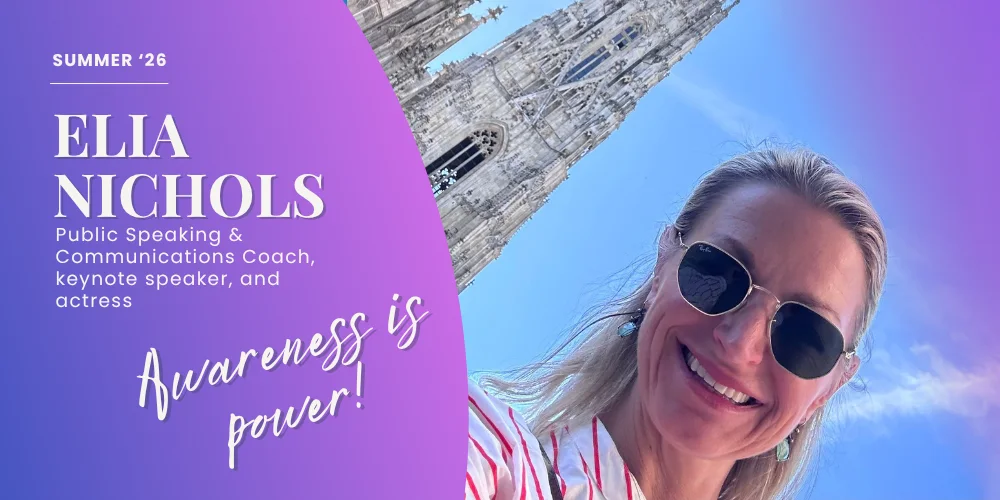
Last week in Vienna, I had the opportunity to work with the cross-functional leadership team at AOP Health, focusing on persuasive speaking.
When leaders from R&D, Clinical Development, Regulatory, Legal, HR, and Communications come together, one thing becomes very clear: influence is not tied to a title—it is tied to how well you communicate your ideas.
In highly technical and scientific environments, clarity is of utmost importance, especially when you have as broad an audience as the cross-functional heads of a pharmaceutical company.
Two things set strong communicators apart from weak ones:
The ability to communicate why what you are saying is of value to your audience
AND
The ability to engage the audience and keep their attention throughout the presentation.
I view it as a mix of performing while communicating your key messages succinctly.

In Vienna, the biggest challenge for these high-level leaders was communicating right from the start why the audience should actually listen to them. What was their real message? Why was it of value to their specific audience?
Many of them over-explained their content. But when we were in the audience, we told them that we didn’t need all of the details, that too much information actually confused us; these leaders became much more focused and interesting speakers.
Even an actor goes through this process when approaching a new role- you first have to figure out why you are saying what you are saying. Then you learn your lines and put the physicality and voice on top of it.
But you start with: WHY AM I SAYING THESE WORDS? WHAT IS MY MOTIVATION?
So, before you start building your slide deck, ask yourself: in 1-2 sentences max,
- What does my audience need to hear?
- Why is it of real value for them?
- How will knowing this information benefit them?
Once you’ve honestly answered that question for yourself, build your slide deck with that information – the 1-2 sentences they need to know, a few slides with stories, case studies, or a chart that proves or explains your main message, and a call to action that tells the audience what you want them to do now.
And that’s it!
Pro tip: Your slides should feature engaging visuals and minimal text. You fill in the extra content, not your slides.
If the audience doesn’t understand something or wants more details, don’t worry. They’ll ask!
Remember- you communicate expertise more clearly through simple, succinct messages. Throw in a bit of flair (through storytelling, audience interaction, and attention getters!), and your audience will listen more willingly AND see your value.
The training in Vienna was a valuable reminder that whether you’re a CEO or a Junior staff member, you’ve got to start with: “This is why what I will tell you today is of value to YOU!”
Online Now!
Voice Is a Superpower (and It Changes Fast)
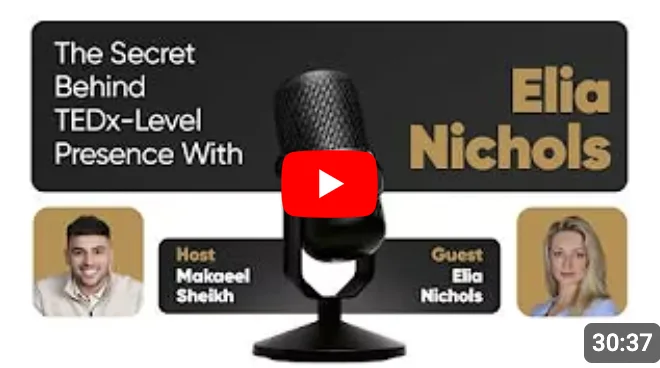
You might remember in February, when I mentioned my podcast with Nur? Well it is live! You can watch it on their Youtube channel, but in the meantime here is a clip…
Did you miss my last Speak Easy Secret?
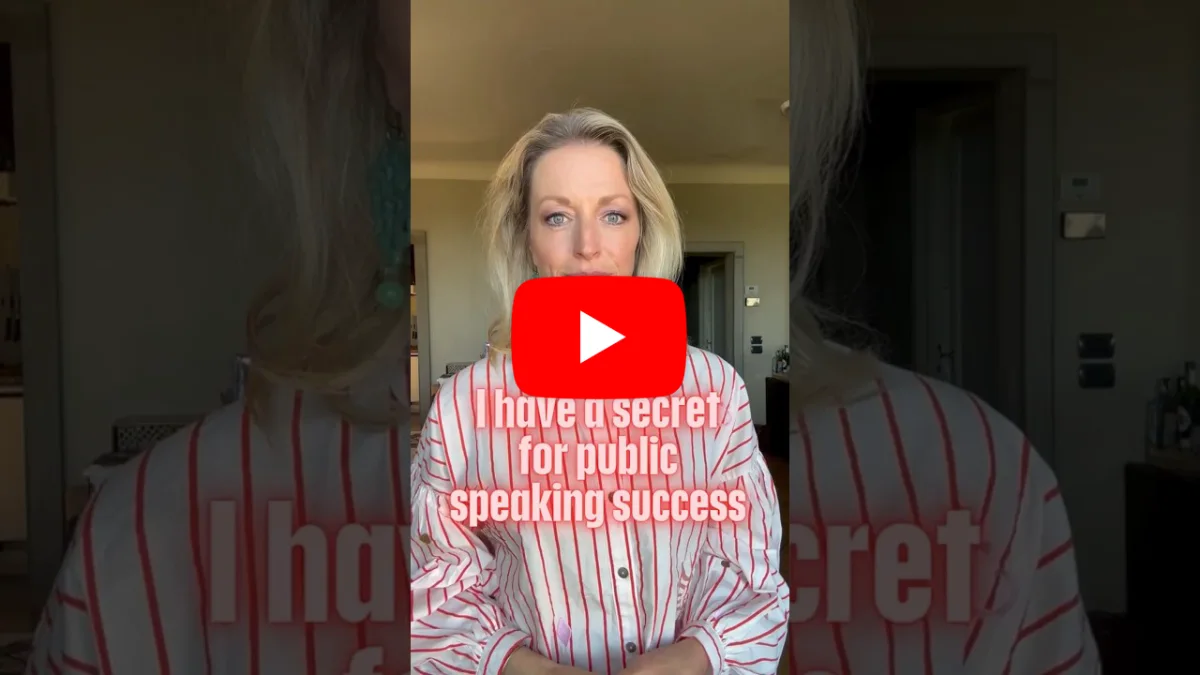
Every presentation needs an engaging delivery and that requires vocal variety, energy, and presence. These exercises help warm up the voice, calm the nerves, and connect the mind, body, and voice so they work together more effectively.
This ritual helps me:
* Improve articulation
* Calm nerves
* Strengthen vocal and physical presence
* Increase energy and focus
* Walk into the room feeling ready
With gratitude,
Elia
Communicate the best of yourself.
PS – If this info was helpful, please pass it on to someone else who could find it beneficial!