A Skill to Add to Your Toolkit This Year
I recently wrapped up a training on assertive communication, and—as often happens when I teach this topic—I walked away thinking: This shouldn’t be reserved for boardrooms or training rooms.
January has a particular kind of energy. Fresh calendars. New intentions. A quiet hope that this year might feel a little lighter.
And yet, many of us carry the same patterns straight into the new year:
overcommitting, staying silent to avoid friction, and saying yes when our body is already tired.
So for this January edition of Speak Easy Secrets, I want to offer you one skill that has the power to change not just how you speak—but how you move through the year:
Assertiveness.
Not as a personality trait.
Not as a leadership style.
But as a daily communication practice of clarity and self-respect.
What assertiveness really is
Assertive communication means expressing what you think, feel, and need clearly and calmly—without aggression and without shrinking yourself.
What assertiveness sounds like in everyday life
Assertiveness doesn’t have to be heavy, rude, or dramatic. It often sounds refreshingly simple.
It can sound like:
“I won’t be able to take that on right now.”
“That timeline doesn’t work for me—here’s what would.”
“I need a bit more context before I can say yes.”
“I see this differently, and I’d like to share my perspective.”
No blaming.
No long explanations.
No apologizing for having needs.
Just clear, grounded communication.

Assertive ≠ Aggressive
One of the biggest myths I see—especially with international professionals and thoughtful leaders—is this:
If I’m assertive, I’ll sound rude.
But assertiveness isn’t about pushing.
It’s about respecting your boundaries—and asking others to do the same.
It’s firm and kind.
Calm and clear.
Respectful—to others and to yourself.
And yes, you can be assertive:
with colleagues
with clients
with family
with people who have more authority than you
Healthy communication systems depend on this balance.
What assertive people do consistently
When you look closely, assertive people tend to do three things—again and again:
1. They take responsibility for what they say (and how they say it).
They don’t blame, accuse, or hide behind vagueness.
2. They communicate expectations clearly and explicitly.
They don’t assume others will “just know.” They say what works—and what doesn’t.
3. They accept that they can’t control how others respond.
This is the hardest—and most freeing—part. Assertiveness isn’t about guaranteeing a positive reaction. It’s about showing up clearly, respectfully, and honestly.
A simple structure you can use right away
If you ever freeze in the moment and think, “I know I should be assertive, but I don’t know what to say,” try this:
I + concern or expectation + concrete request + deadline or next step
For example:
“I want to make sure we’re aligned. I need the final version by Friday so I can prepare properly.”
“I’m concerned about the timeline. I’d like to propose moving the deadline to next Wednesday. Let me know if that works for you.”
“I can’t commit to this as it stands. What I can do is review it next week. Can we reconnect on Monday?”
Clear.
Respectful.
Direct—without being harsh.
A small January invitation
As you step into this new year, here’s my invitation to you:
Notice one situation where you usually default to silence, over-explaining, or saying yes out of habit.
Experiment with a clear, respectful, assertive response instead.
You might be surprised how much lighter things feel when your boundaries are clear—and how much more peaceful your life can be.
Here’s to a calmer, clearer, more intentional start to 2026.
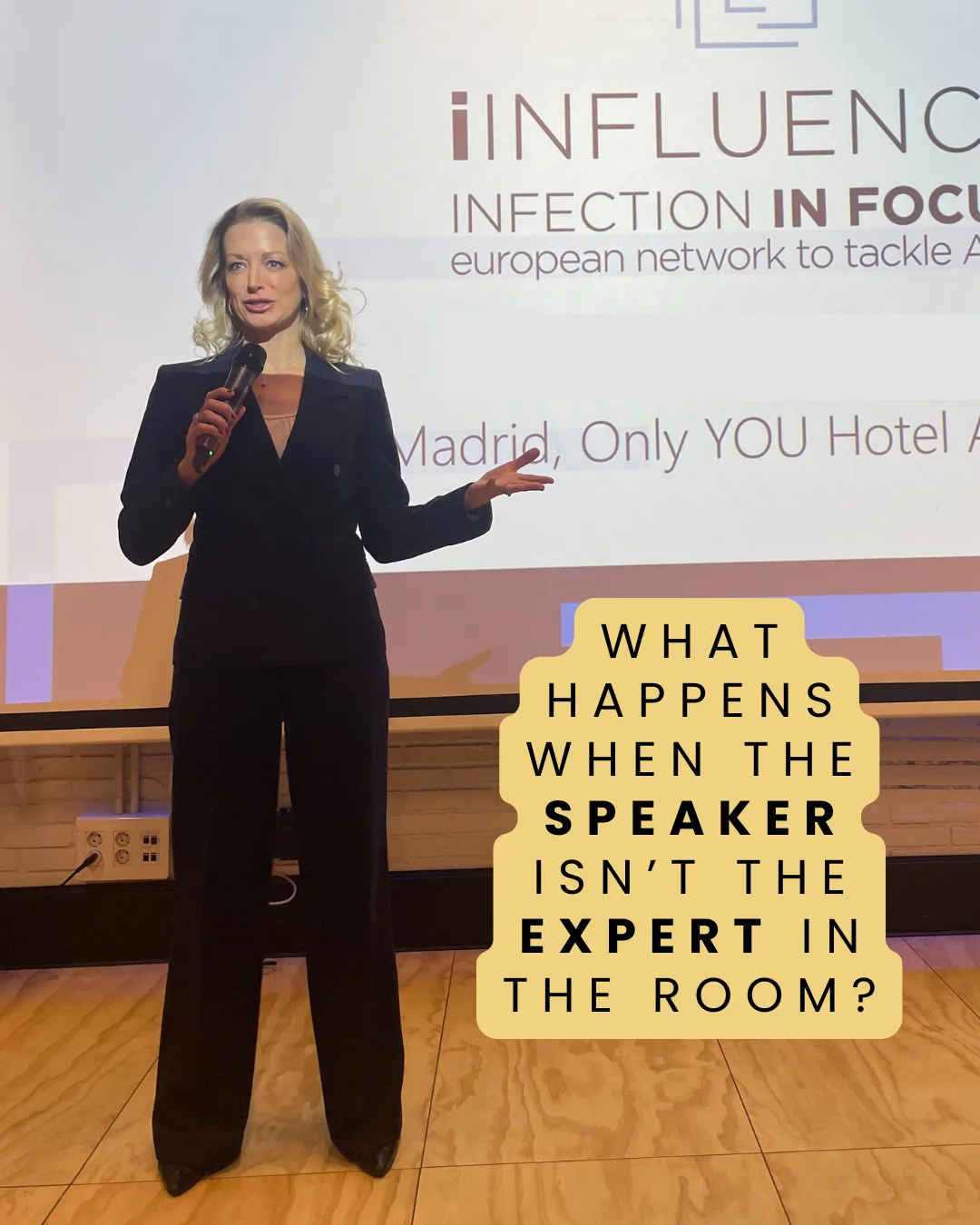
Here’s what made it work:
I started with the audience, not the slides.
Before writing a single word, I asked myself what busy doctors truly needed to know about giving engaging congress presentations and, just as importantly, what they did not need.
Every story, example, image, and data set came from the medical field. Even articulation exercises used terms like “streptococcus” and “antimicrobial resistance.” Not your typical tongue twisters.
The outcome? A fully engaged room and practical tools participants could use immediately in their next congress presentation.
If you want your keynote to land, start with your audience. Everything else follows.
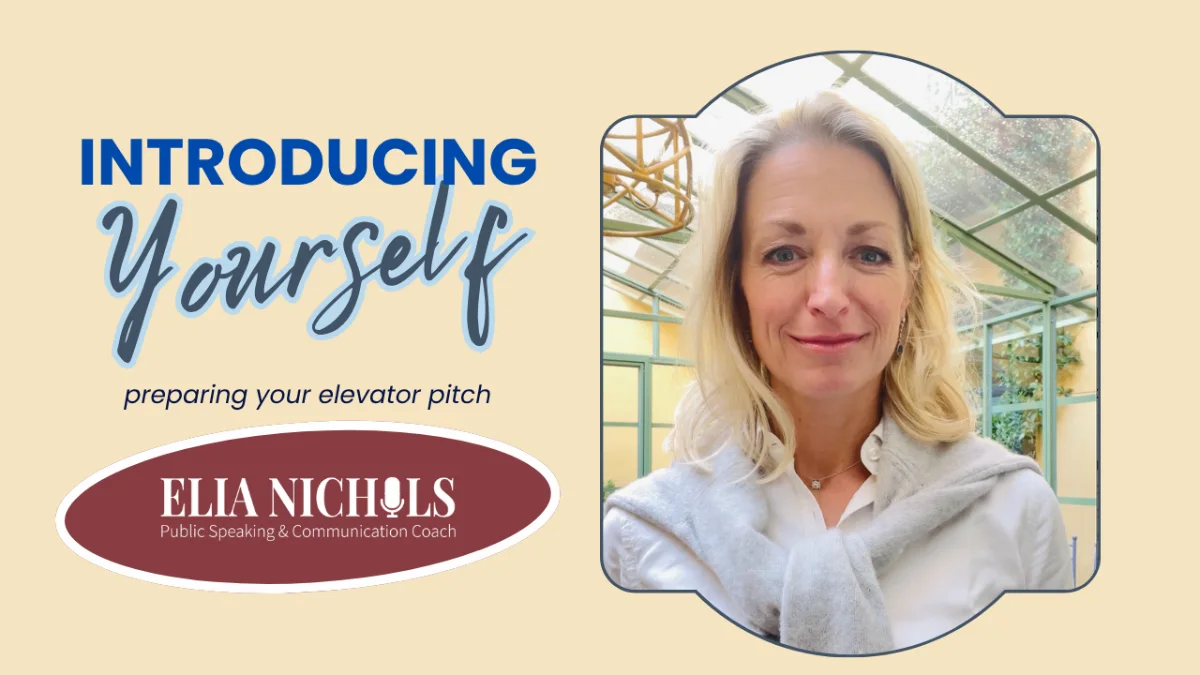
Did you miss my last Speak Easy Secret?
A new client recently told me, “I hate introducing myself.”
And I understood exactly what he meant.
We introduce ourselves constantly — in meetings, at events, on Zoom — yet so many people stumble, apologize, or leave feeling like they made a weaker impression than they hoped.
But here’s the funny thing: there’s no one you know better than yourself.
Logically, introducing yourself should be the easiest thing in the world… right?
Here is a tutorial with a few tips on how to improve your introduction … and your success!
With gratitude,
Elia
Communicate the best of yourself.
PS – If this info was helpful, please pass it on to someone else who could find it beneficial!